

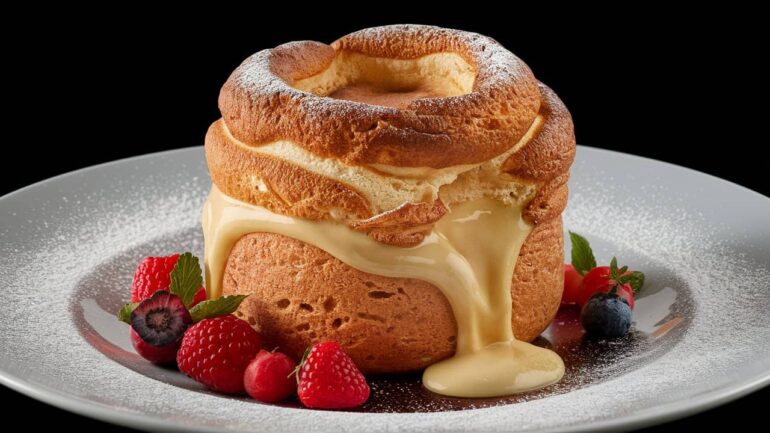

Some dishes look simple on the surface but will test every skill you have in the kitchen.
These are the foods that trip up experienced home cooks and give professional chefs a hard time.
We ranked 15 of the hardest dishes to make from scratch based on technique, time, and how many things can go wrong along the way.
If you have conquered all 15, you can probably cook anything.
1. Consommé
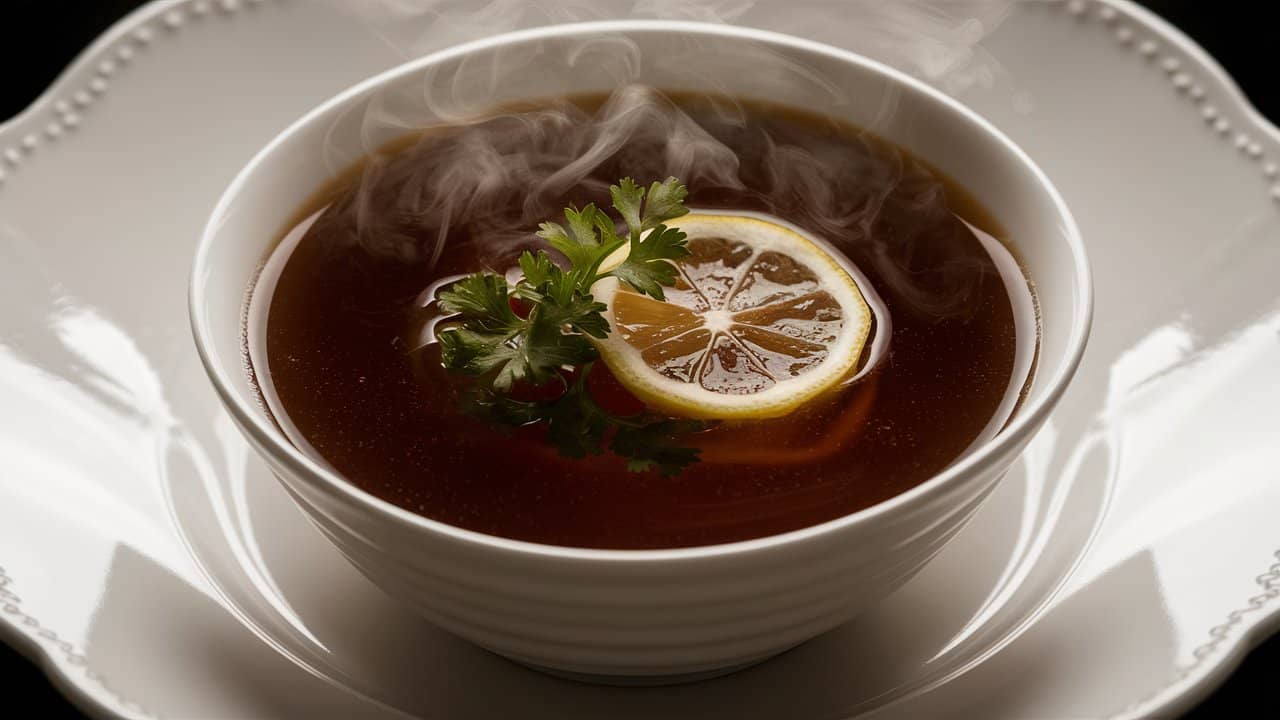
Difficulty: 9/10
Consomme is a perfectly clear broth that tastes deeply rich despite looking like tinted water.
You start by simmering meat, bones, and vegetables for hours, then use a raft of egg whites and ground meat to trap every last impurity.
The tricky part is the clarification.
One wrong move, like stirring too hard or letting it boil, and your broth turns cloudy.
There is no fixing it once that happens.
Most home cooks have never even attempted this because it demands hours of patience for what looks like a simple bowl of soup.
That deceptive simplicity is what makes it one of the hardest dishes in classical French cuisine.
2. Beef Wellington
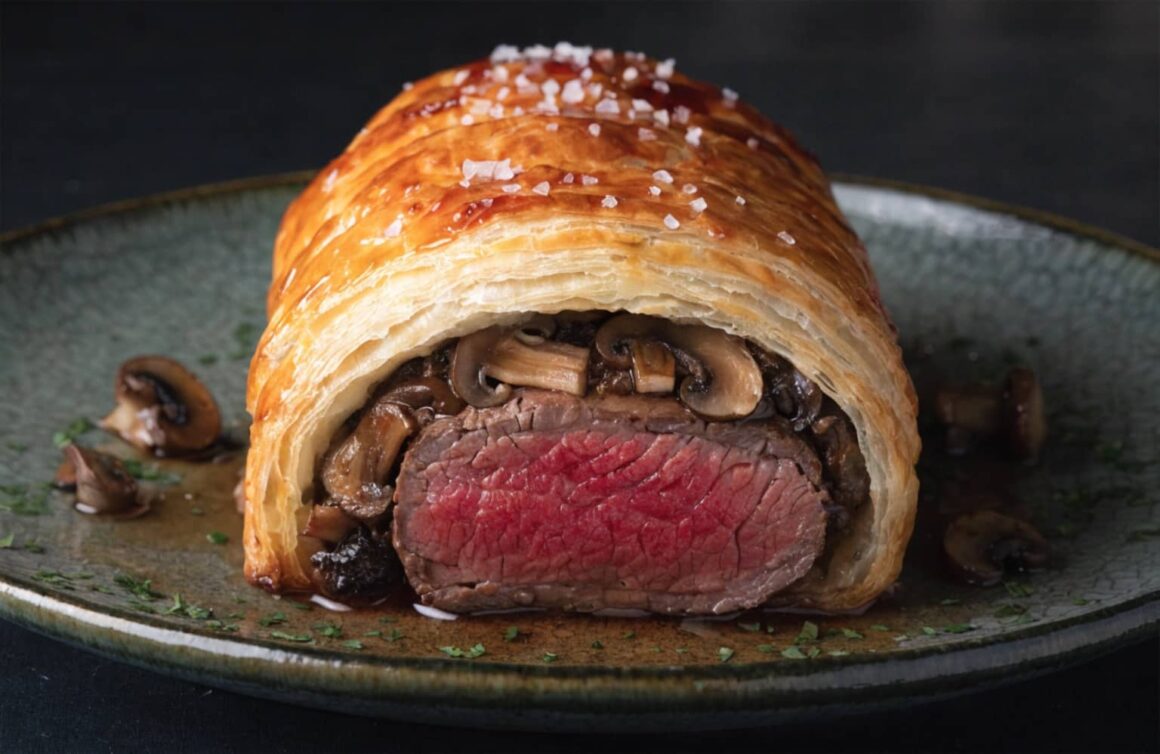
Difficulty: 8/10
Beef Wellington looks spectacular when it works and disastrous when it does not.
You need to sear a beef tenderloin, wrap it in mushroom duxelles and pate, then encase everything in puff pastry and bake it.
The challenge is getting the beef cooked to a perfect medium-rare while the pastry turns golden and crispy.
Overcook the beef and the whole thing is ruined.
Underbake the pastry and you get a soggy bottom.
Moisture is the enemy here.
The duxelles must be cooked dry enough that it does not make the pastry soggy, and the whole thing needs to be wrapped tight with no air pockets.
3. Croissants
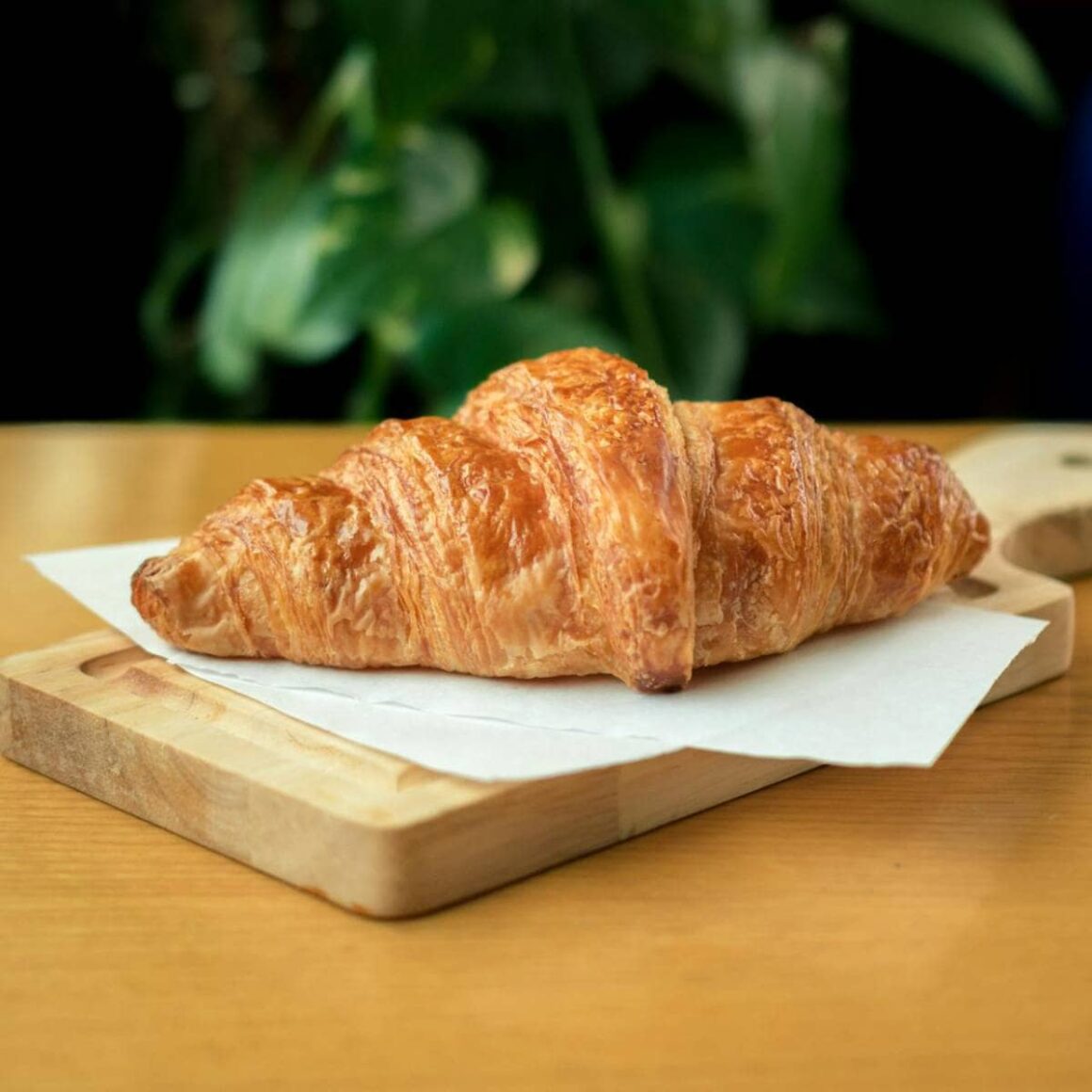
Difficulty: 9/10
Making croissants from scratch is a two-day process that requires creating 81 individual layers of dough and butter through a technique called lamination.
You roll the dough, fold in a cold block of butter, chill it, and repeat multiple times.
If the butter gets too warm, it melts into the dough and you lose the layers.
If the dough gets too cold, the butter cracks and creates uneven pockets.
Temperature control is everything.
Even professional bakeries with climate-controlled kitchens have off days with croissants.
At home, in a warm kitchen, the margin for error is razor thin.
4. Macarons
Difficulty: 8/10
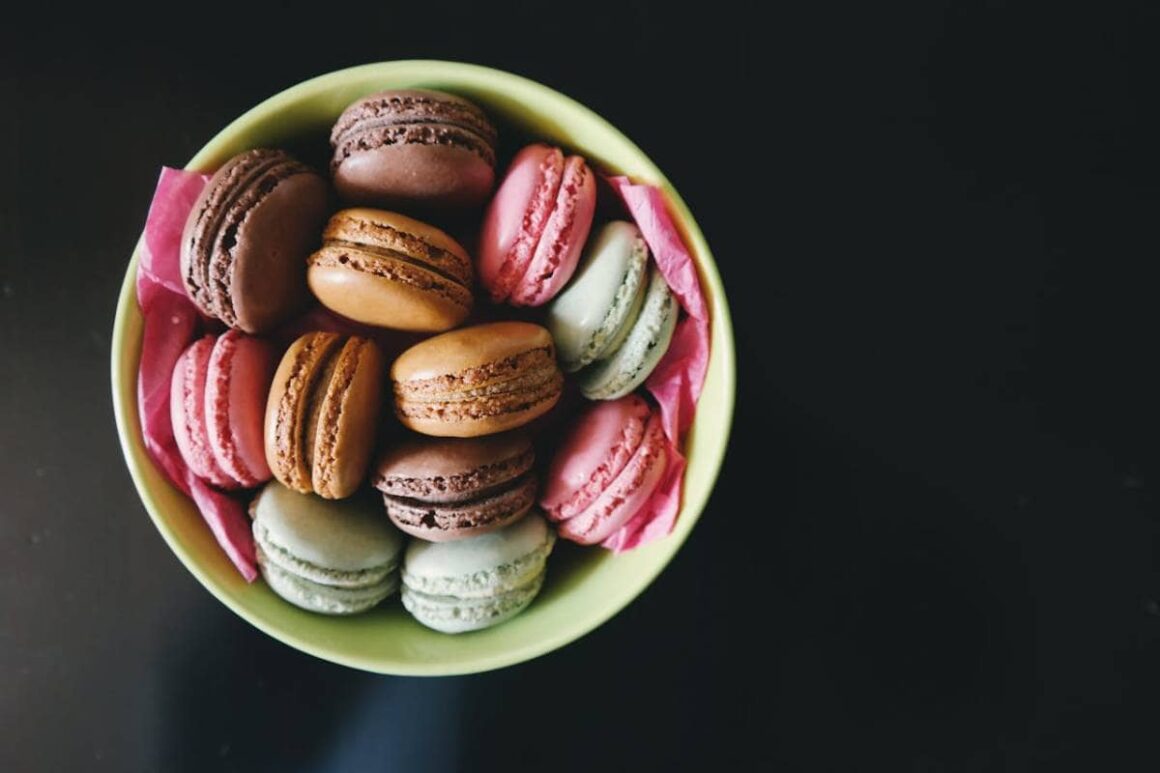
Macarons have broken more home bakers than almost any other dessert.
They are finicky almond meringue cookies that demand precision at every step.
The batter has to be folded to exactly the right consistency.
Too much and it spreads flat.
Too little and the tops crack.
Humidity, oven temperature, and even the age of your egg whites all affect the outcome.
The signature “feet” at the base of each macaron only form if everything goes right.
Most people need several failed batches before they get a single tray that looks and tastes the way it should.
5. Baked Alaska
Difficulty: 7/10
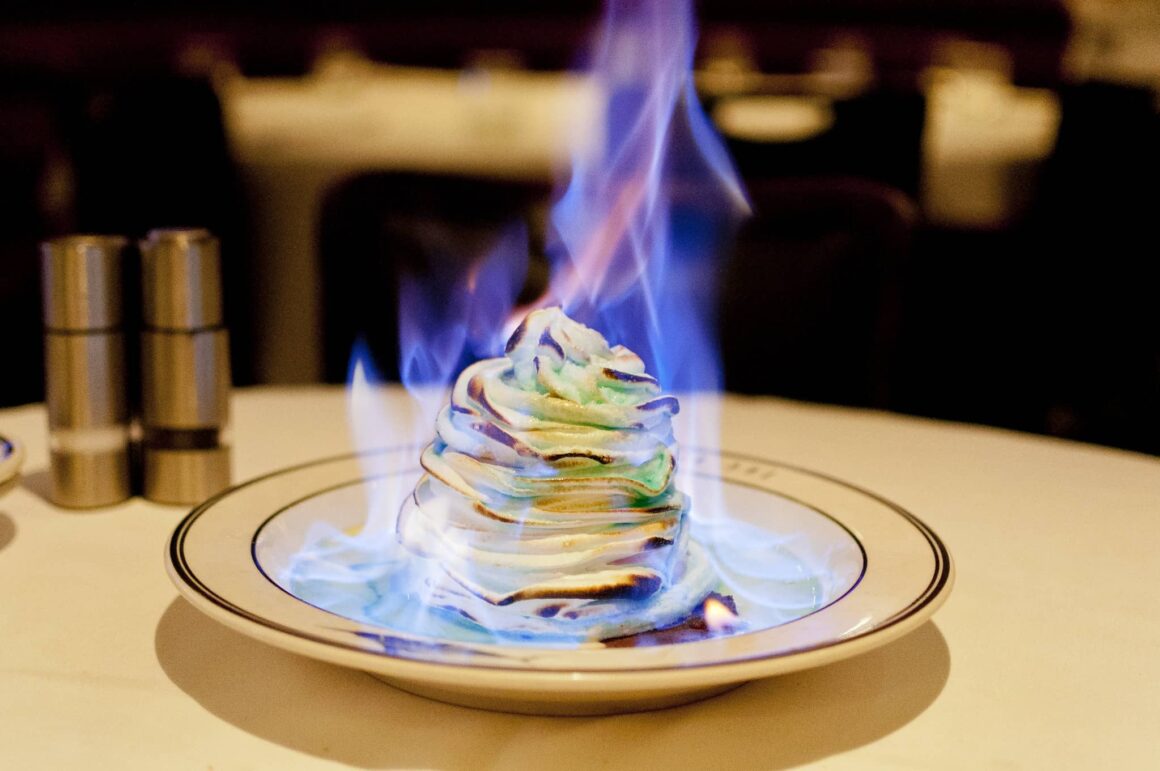
Baked Alaska is an exercise in contradictions.
You take ice cream, sit it on cake, cover the whole thing in meringue, and throw it in a screaming hot oven.
The goal is to brown the meringue without melting the ice cream inside.
You have a very short window, usually under five minutes, to get it right.
The ice cream must be frozen rock solid before assembly, and the meringue layer needs to be thick and even to insulate it.
Any thin spot and you end up with a puddle.
6. Soufflé
Difficulty: 8/10
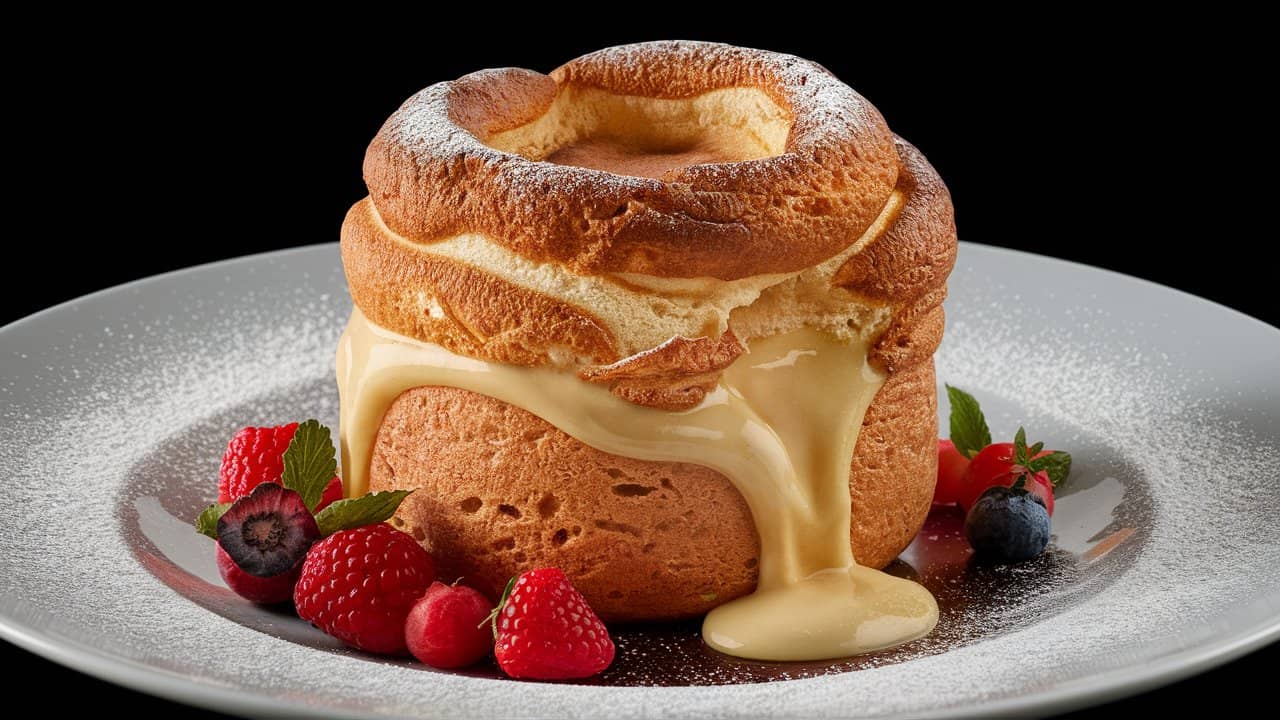
A souffle rises or it does not, and you will not know which until you open the oven door.
The technique requires folding whipped egg whites into a flavour base without deflating them.
Fold too aggressively and you lose the air.
Fold too gently and the mixture stays streaky and does not rise evenly.
Timing matters as much as technique.
A souffle starts falling the moment it leaves the oven, so your diners need to be at the table before the dish is ready, not the other way around.
This is one of the few dishes where the kitchen controls the schedule, not the cook.
7. Turducken
Difficulty: 8/10
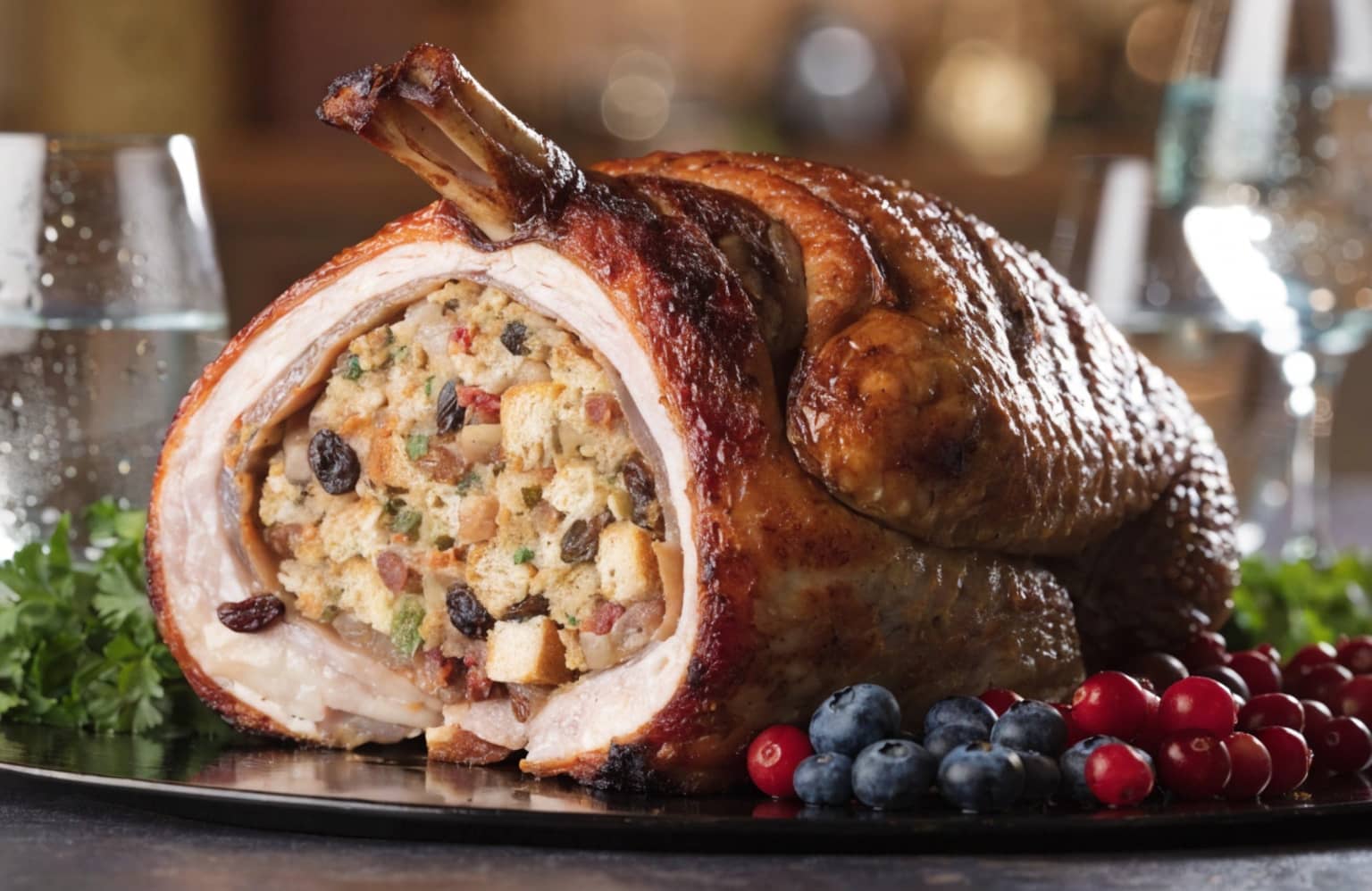
A turducken is a deboned chicken stuffed inside a deboned duck stuffed inside a deboned turkey, with layers of stuffing between each bird.
The deboning alone can take over an hour per bird if you have not done it before.
You need to remove every bone without tearing the skin, which requires a sharp knife and a lot of patience.
Then comes the cooking challenge.
Three different birds with three different ideal temperatures all need to finish cooking at the same time.
The turkey dries out while the chicken is still raw if you are not careful.
8. Béarnaise Sauce
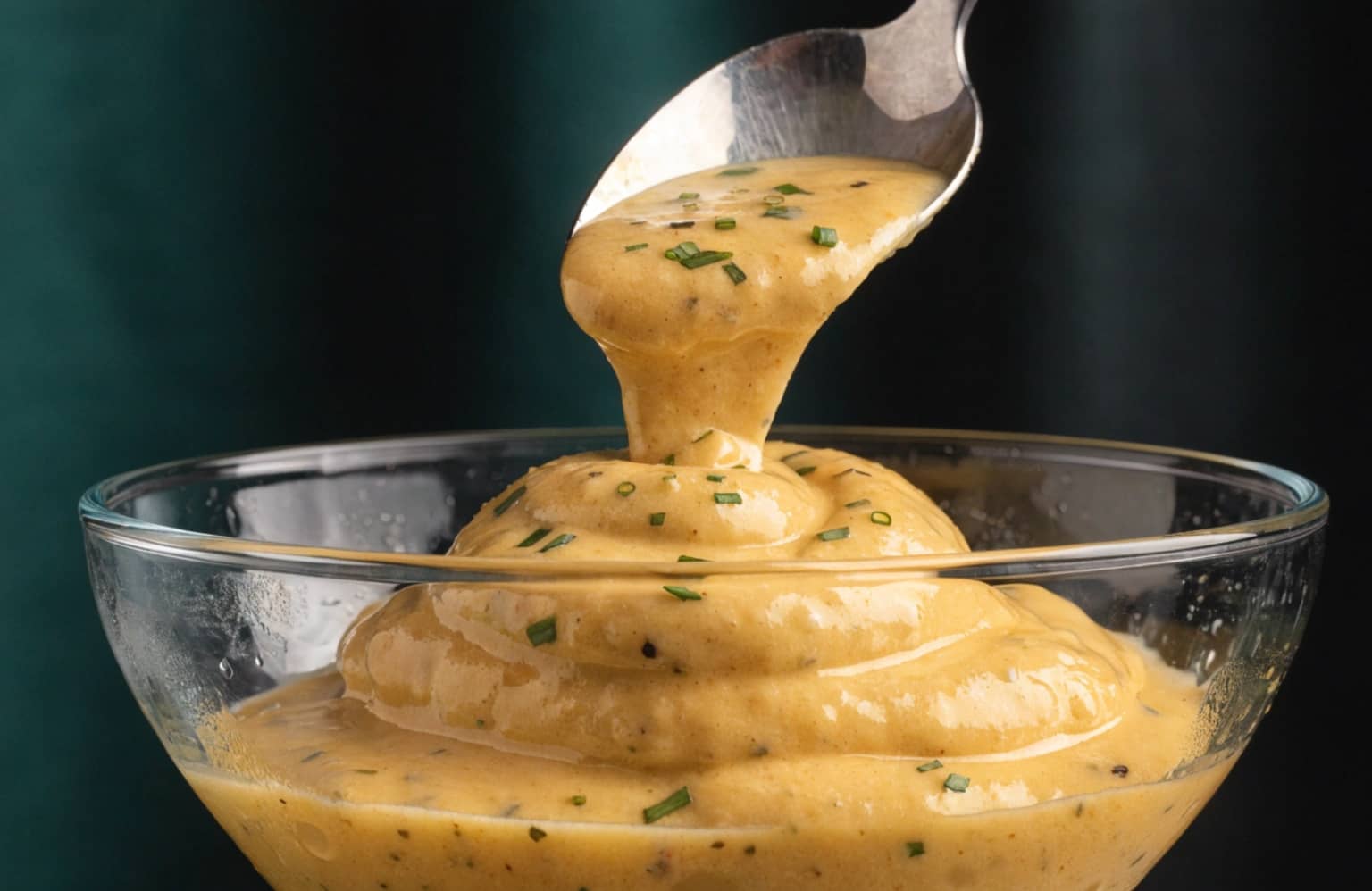
Difficulty: 7/10
Bearnaise is a warm emulsion of clarified butter, egg yolks, vinegar, and tarragon.
It is the kind of sauce that can split in seconds if you look away.
The egg yolks must be whisked over gentle heat until they thicken just enough to hold the butter.
Too much heat and you get scrambled eggs.
Too little and the sauce stays thin and never comes together.
Even once it is done, keeping bearnaise at the right temperature for service is a challenge.
It cannot be reheated without breaking, so you make it at the last possible moment and serve it immediately.
9. Mole
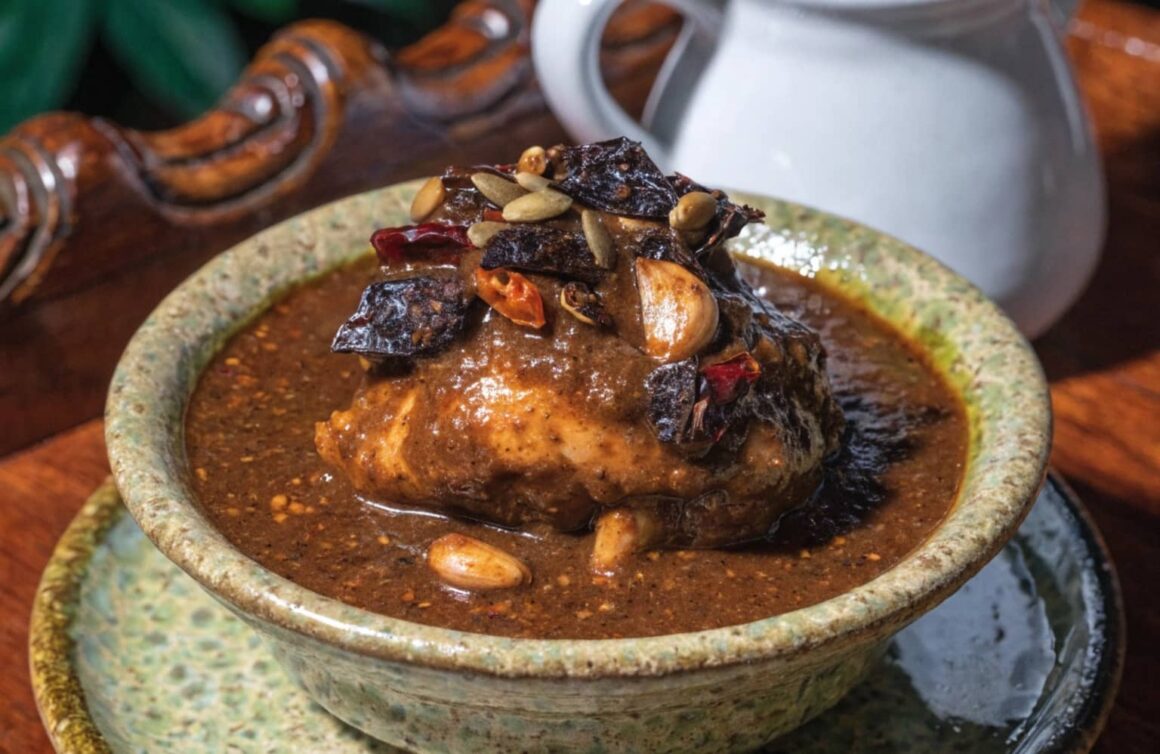
Difficulty: 8/10
Mole is not one recipe but a family of complex Mexican sauces, some with over 30 ingredients.
A traditional mole can take an entire day to prepare.
You toast and rehydrate multiple types of dried chiles, grind spices, fry aromatics, blend everything into a paste, and simmer it for hours.
Each ingredient needs to be handled differently.
Some chiles are toasted, some are fried.
Nuts and seeds are toasted separately.
Chocolate goes in at the end.
The depth of flavour comes from layering all of these components carefully, and there is no shortcut that produces the same result.
10. Pho
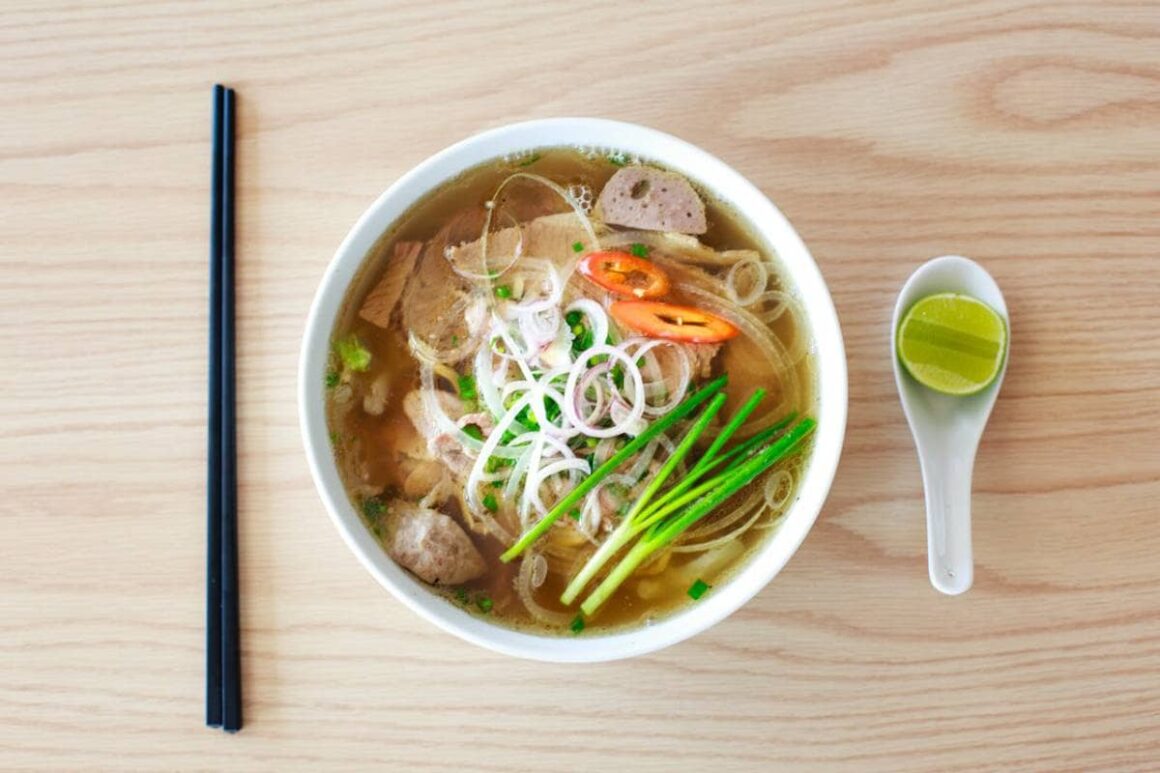
Difficulty: 7/10
A proper bowl of pho starts with bones, and it takes hours to get the broth right.
Beef pho requires simmering beef bones, charred onion, and charred ginger with whole spices like star anise, cinnamon, and cloves for anywhere from 6 to 12 hours.
You skim impurities constantly to keep the broth clear.
The spice balance is where most home cooks struggle.
Too much star anise and it tastes like licorice. Too much cinnamon and it becomes sweet.
The aromatics have to be measured carefully and pulled out at the right time.
Then there is the assembly, which involves rice noodles cooked to the right texture, thinly sliced raw beef, and a tray of fresh herbs that each diner adds to taste.
11. Peking Duck
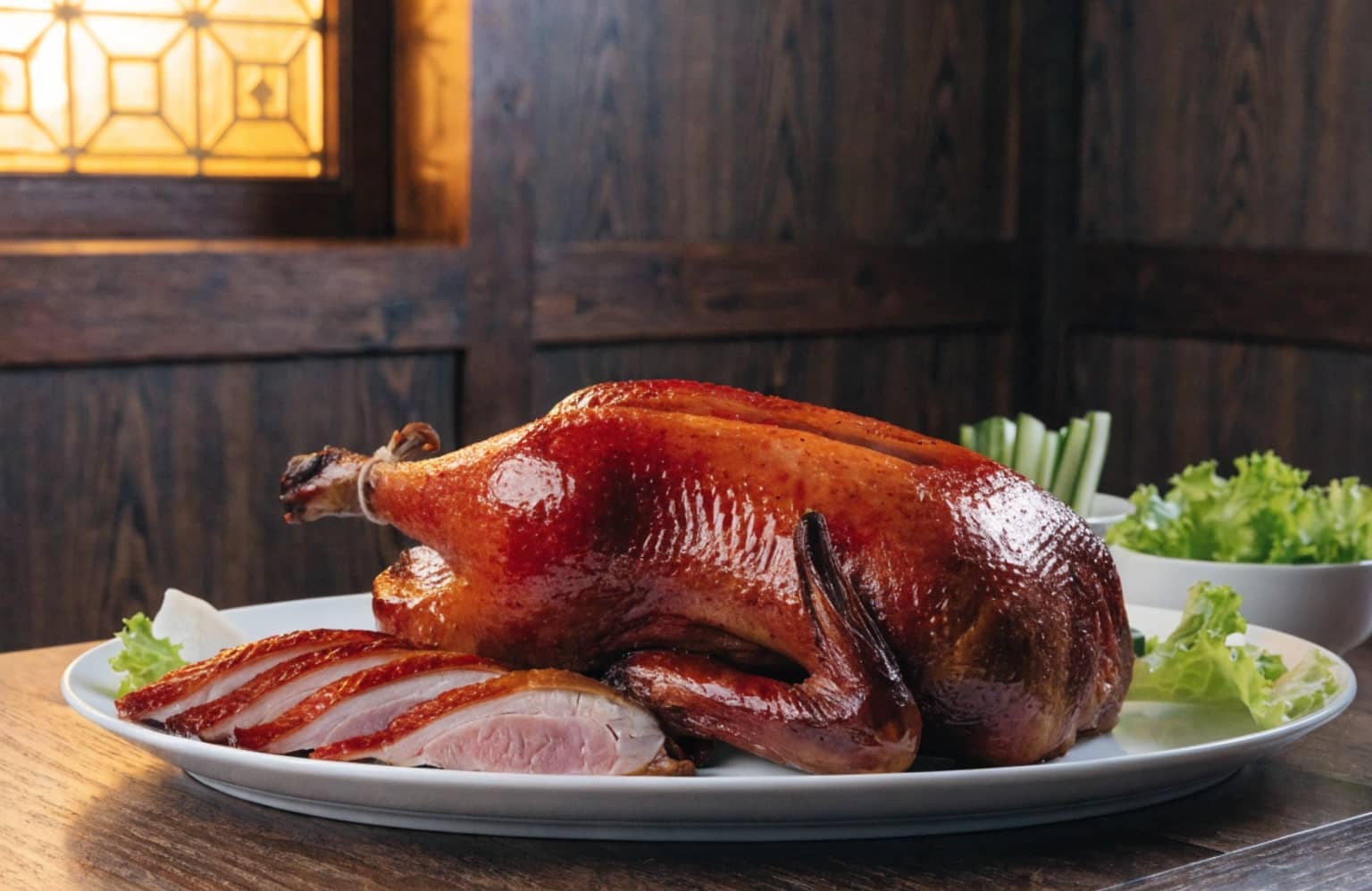
Difficulty: 9/10
Peking duck is a multi-day project.
You start by separating the skin from the meat, traditionally using air pumped between the two.
Then the duck is coated in a maltose glaze and hung to dry for 24 to 48 hours.
This drying step is what creates the signature crackling skin.
Roasting requires consistent high heat and careful rotation so the skin crisps evenly without burning.
The duck is then carved tableside, with the skin served separately from the meat.
Most restaurants that serve proper Peking duck have cooks dedicated specifically to this one dish.
Attempting it at home means finding somewhere to hang a whole duck for two days, which is a challenge before you even start cooking.
12. Galantine
Difficulty: 9/10
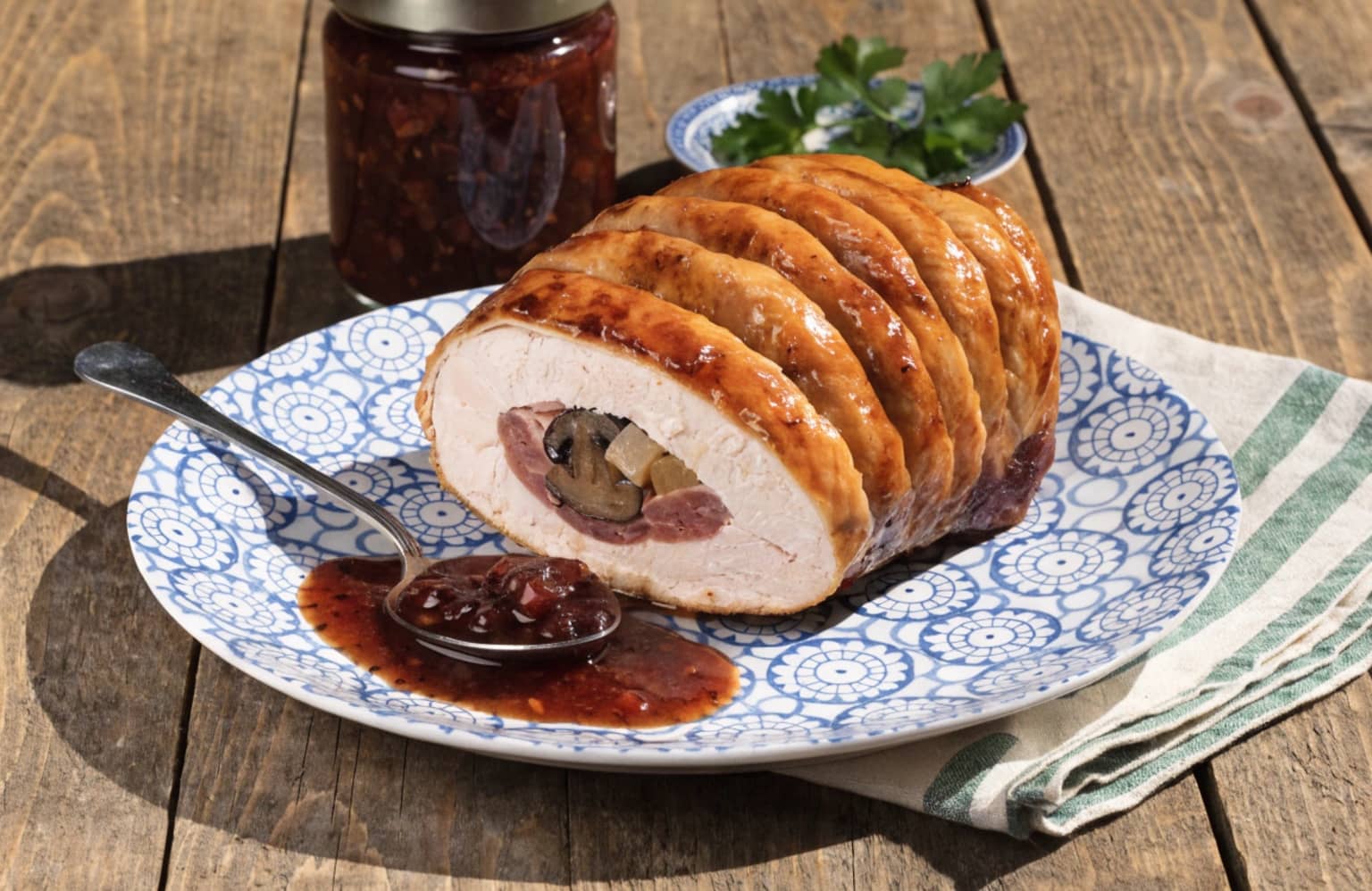
Galantine is one of the most technically demanding dishes in classical French cooking and one of the least attempted at home.
You debone an entire chicken or other poultry, keeping the skin completely intact.
The deboned meat is then layered with a forcemeat stuffing, rolled back into shape, tied, and gently poached.
After poaching, it is chilled and served cold, often coated in a crystal-clear aspic.
Every step requires precision.
The deboning alone takes significant knife skills, and the poaching temperature must stay low enough that the roll holds its shape.
13. Chile en Nogada
Difficulty: 7/10
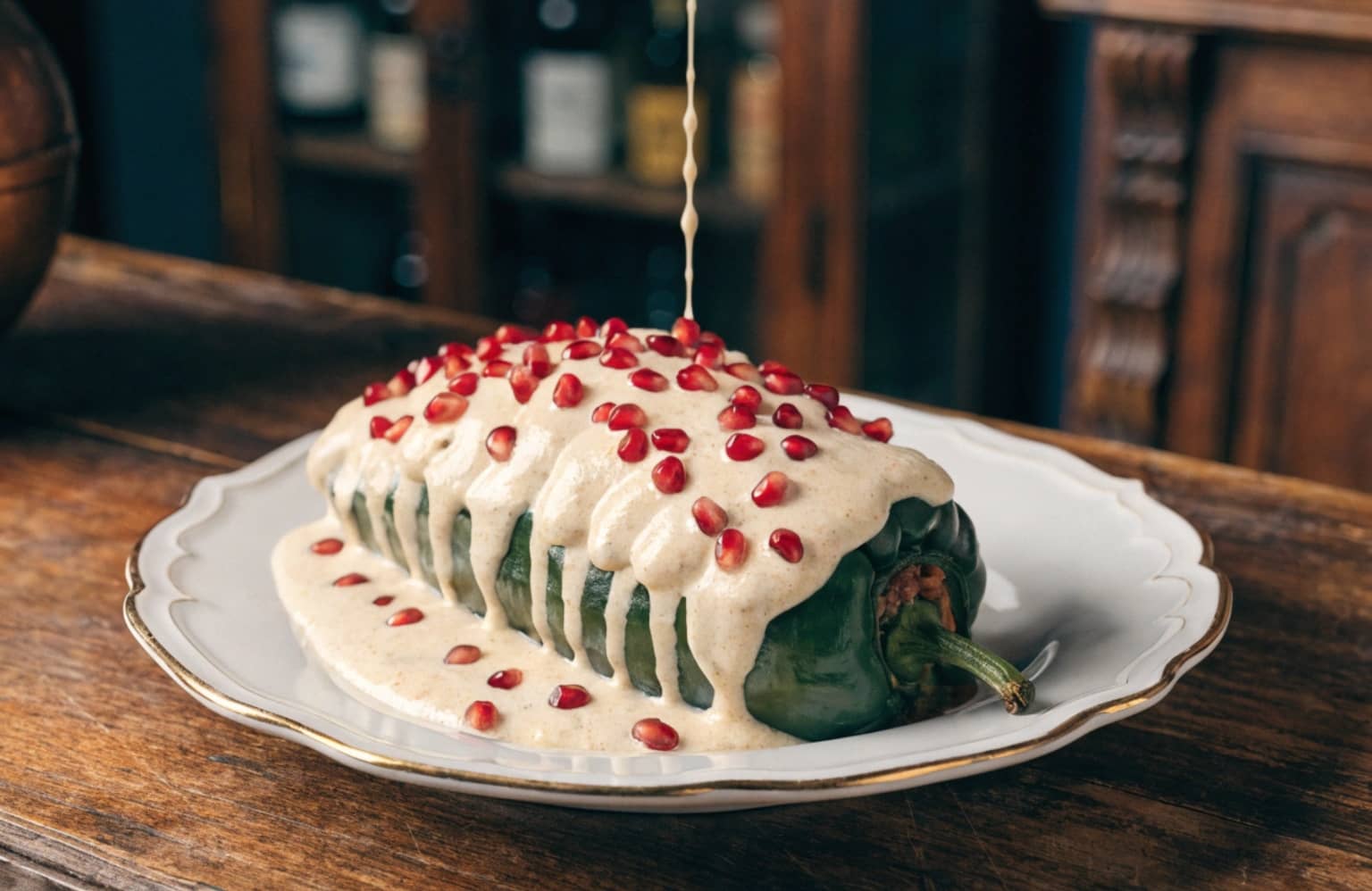
Chile en Nogada is a seasonal Mexican dish tied to Independence Day celebrations.
It combines a roasted poblano pepper stuffed with picadillo, a meat and fruit mixture, topped with a creamy walnut sauce and fresh pomegranate seeds.
The complexity is in the number of components.
The stuffing alone requires ground meat, multiple fruits, spices, and nuts, all cooked together.
The walnut sauce must be made fresh and has a very short window before it oxidizes and turns grey.
Getting the poblano roasted and peeled without it falling apart adds another layer of difficulty.
Each element needs to come together at the same time for the final plating to work.
14. Tonkotsu Ramen
Difficulty: 8/10
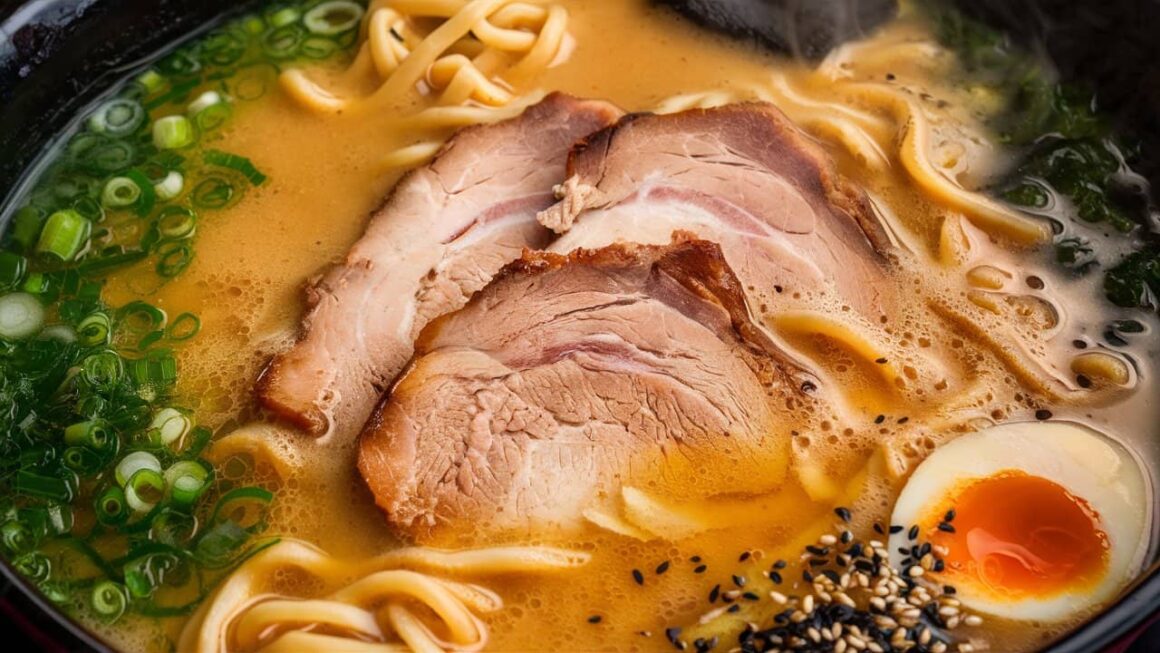
Tonkotsu ramen broth requires roughly 12 hours of aggressive boiling to break down pork bones into a creamy, opaque soup.
This is not a gentle simmer.
The bones need to be boiled hard enough that the collagen and fat emulsify into the broth, which requires constant monitoring and topping up with water as it evaporates.
Then there are the toppings.
A proper bowl includes chashu pork (braised and torched), a marinated soft-boiled egg, and ideally handmade noodles with the right alkaline chew.
Each component is a recipe on its own, and they all need to come together for a single bowl.
15. Coq au Vin
Difficulty: 6/10
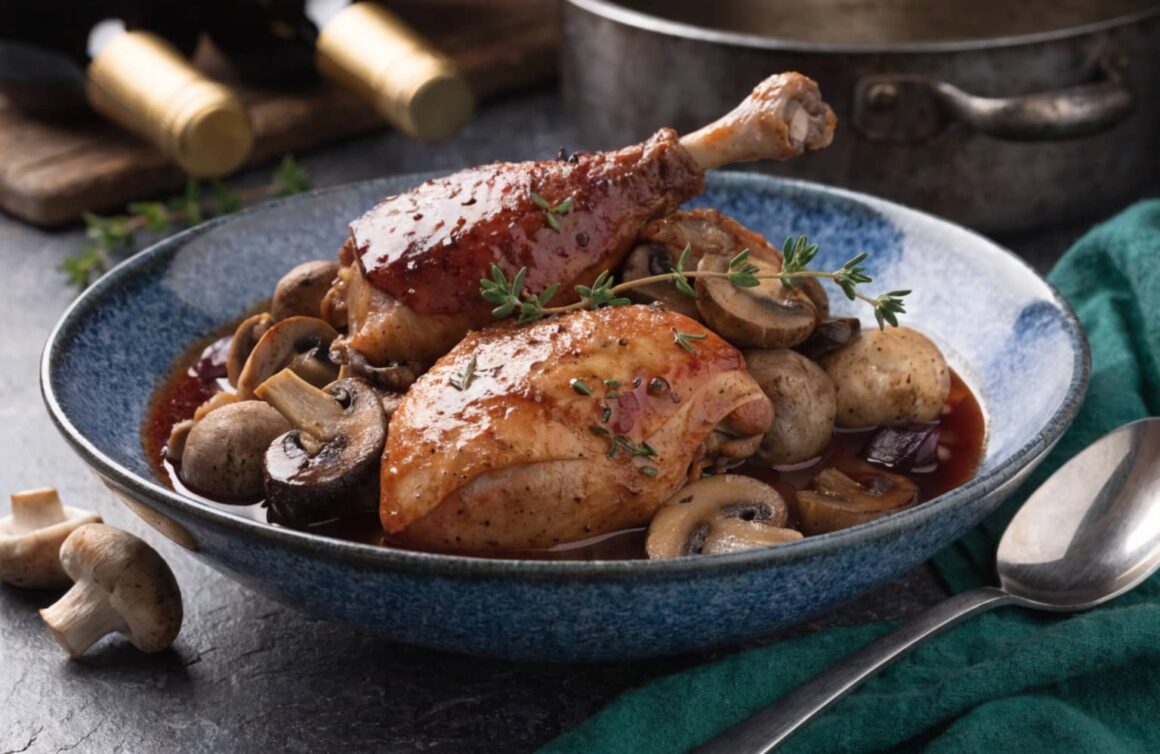
Coq au Vin is the most approachable dish on this list, but doing it properly is harder than most people expect.
Traditionally it calls for a rooster, not a chicken, which is tougher and requires longer braising.
The bird is marinated in red wine overnight, then braised slowly with lardons, mushrooms, pearl onions, and garlic.
The sauce is where most home cooks fall short.
It needs to reduce to a glossy, deeply flavoured coating that clings to the chicken.
Rushing the braise or using a young chicken instead of an older bird changes the texture and depth completely.
It is a forgiving dish compared to the others on this list, but the gap between a decent version and a great one is wide.
Some of these dishes take days.
Some take years of practice.
If you are looking for a cooking challenge, start with one of the lower difficulty items and work your way up.
And if you have already nailed all 15, we want to hear about it.
Share this list with your foodie friends and see who’s ready to take on these culinary challenges!